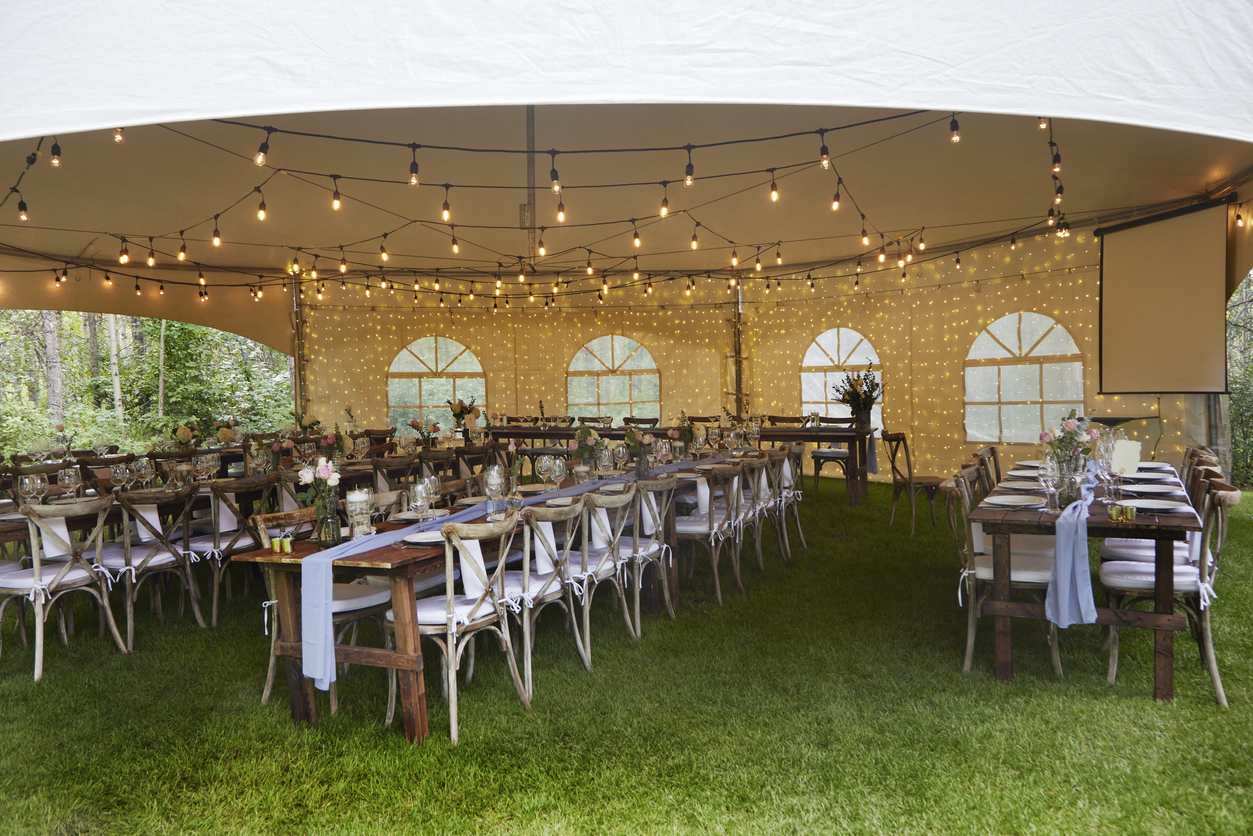
To choose the right tent size, start with your guest count, seating style, food service setup, dance floor needs, entertainment, and extra space for bars, buffets, gift tables, walkways, and weather coverage. A seated dinner requires more square footage per guest than a standing cocktail event, and most events should include extra space for comfort, service flow, and covered vendor space.
Planning an outdoor event starts with one major question: how big should the tent be? A tent that is too small can feel crowded, block service flow, and leave guests exposed to sun or rain. A tent that is too large can feel empty and may cost more than necessary. The right footprint gives your event room to breathe while keeping the layout comfortable, functional, and polished.
In this guide, we will explain how to calculate tent size based on your guest list, seating style, event layout, and rental needs. Whether you are planning a wedding, graduation party, corporate event, backyard celebration, or community gathering, Hillsborough Tent & Party Rental can help you choose the right tent footprint from the start.
Why Tent Size Depends on More Than Guest Count
Guest count is the starting point, but it is not the full calculation. Two events with 100 guests may need very different tent sizes depending on how the space is used.
A 100-person cocktail party with scattered high-top tables may need less tent coverage than a 100-person wedding with round tables, a buffet, a dance floor, a DJ, a bar, and a gift table. The guest list tells you how many people need coverage. The layout tells you how much room they need.
Tent size depends on:
- Number of guests
- Seating style
- Table shape and size
- Buffet or plated meal service
- Bar setup
- Dance floor size
- DJ, band, or speaker area
- Ceremony space
- Gift, cake, dessert, or favor tables
- Walkways and service aisles
- Weather protection needs
- Property layout
- Ground surface
- Tent type and anchoring requirements
For the most accurate footprint, plan the event zones before choosing the tent size.
Quick Tent Size Calculator by Event Style
As a simple starting point, estimate square footage by how guests will use the space.
Use these general guidelines:
- Standing cocktail event: about 8 to 10 square feet per guest
- Seated rows for a ceremony: about 8 to 10 square feet per guest
- Seated dinner with rectangular tables: about 10 to 12 square feet per guest
- Seated dinner with round tables: about 12 to 15 square feet per guest
- Dinner with buffet, bar, and dance floor: about 15 to 20 square feet per guest
- Formal wedding layout with multiple zones: about 18 to 25 square feet per guest
These numbers are not exact for every event, but they help you avoid underestimating. A tent should cover more than the chairs. It should support the full guest experience.
Step 1: Start With Your Guest Count
Begin with your expected attendance, then decide whether you are sizing for the confirmed or invited guest list. For weddings and private events, the final RSVP count is usually more accurate. For public or open-house events, you may need a larger buffer.
Ask yourself:
- How many guests are confirmed?
- Will everyone be under the tent at the same time?
- Are guests seated, standing, or moving between spaces?
- Will children need separate tables?
- Will vendors need covered space?
- Do you need room for last-minute additions?
- Is the event formal, casual, or mixed?
For example, a backyard graduation party may not need seating for every guest at once if people come and go. A wedding reception usually does.
Step 2: Choose the Seating Style
Seating style has one of the biggest impacts on tent size. Round tables need more room than banquet tables because they require additional spacing for chairs, movement, and service access.
Common seating layouts include:
- Standing reception: Best for cocktail parties, open houses, and casual mixers.
- Ceremony rows: Best for wedding ceremonies, presentations, and memorial gatherings.
- Rectangular banquet tables: Efficient for family-style meals, casual events, and long layouts.
- Round tables: Popular for weddings and formal dinners, but they need more space.
- Mixed seating: Useful for parties where some guests sit while others mingle.
If comfort matters, do not pack tables too tightly. Guests should be able to pull out chairs, walk between tables, and reach food or restrooms without squeezing through the layout.
Step 3: Add Space for Food and Beverage Service
Food and drink stations can take up more room than expected. Even a simple buffet needs space for tables, serving lines, staff movement, and guest flow.
Add room for:
- Buffet tables
- Dessert tables
- Cake table
- Coffee or beverage station
- Bar setup
- Catering prep area
- Trash and bus stations
- Water station
- Guest traffic around food lines
A buffet line can create congestion if it is placed too close to guest tables. Bars also need space for lines, coolers, glassware, and staff. If the tent is sized only for seating, the food-and-beverage layout may feel crowded.
Step 4: Decide Whether You Need a Dance Floor
Dance floors are one of the most common reasons tents need to be larger than expected. Not every guest will dance at the same time, but the space should feel open and inviting.
As a rough planning guide:
- Small dance floor: good for 25 to 40 dancers at a time
- Medium dance floor: good for 40 to 75 dancers at a time
- Large dance floor: better for weddings, bands, and high-energy events
Also, account for space around the dance floor. Guests will gather nearby, DJs or bands need setup space, and tables should not be placed so close that chairs block the floor.
If you have a DJ or band, include space for:
- DJ table
- Speakers
- Band instruments
- Stage or platform
- Power access
- Lighting
- Safe cord placement
Entertainment needs should be included early in the tent sizing conversation.
Step 5: Add Event Extras
Most events need more than tables and chairs. Additional event features can quickly change the footprint.
Common add-ons include:
- Welcome table
- Gift table
- Card box table
- Guest book station
- Photo booth
- Lounge furniture
- Coat rack
- Ceremony arch
- Podium
- Display tables
- Silent auction tables
- Kids’ activity area
- Vendor booths
- Heating or cooling equipment
- Sidewalls
- Entry walkway coverage
Each item may seem small on its own, but together they can require a larger tent or a smarter layout.
Step 6: Plan for Weather Coverage
Outdoor events need a weather plan. A tent provides shade and rain protection, but only if the footprint covers the areas people actually need to use.
Consider coverage for:
- Guest seating
- Food and beverage areas
- Entertainment equipment
- Walkways between zones
- Ceremony space
- Check-in or welcome area
- Vendor setup
- Entry and exit points
- Older guests or guests with mobility needs
Sidewalls may be helpful for wind protection, rain protection, privacy, or temperature control. However, sidewalls can also affect airflow and layout. If you plan to use them, mention that during sizing and setup planning.
Step 7: Measure the Site
The right tent size also depends on the available space. A tent needs more than the exact footprint on paper. It also needs room for installation, anchoring, access, and safe clearance.
Before choosing a tent, review the site for:
- Total flat space available
- Slope or uneven ground
- Trees and branches
- Fences
- Patios
- Pools
- Gardens
- Driveways
- Underground utilities
- Septic systems
- Irrigation lines
- Overhead wires
- Walkways
- Delivery truck access
- Property boundaries
A professional site review can help confirm which tent size will fit safely and comfortably. This is especially important for backyard events, historic properties, parks, and tight residential lots.
Common Tent Size Examples
The following examples can help you visualize how guest count affects tent size. Final sizing should still account for layout, seating style, rentals, and site conditions.
For about 40 guests, you may need space for:
- Small seated dinner
- Several banquet tables
- A compact buffet
- Minimal extras
For about 75 guests, plan for:
- Seating under cover
- Buffet or bar area
- Clear walkways
- Optional small dance floor
For about 100 guests, consider room for:
- Round or rectangular tables
- Food and beverage stations
- DJ or entertainment
- Gift or dessert table
- More comfortable guest flow
For about 150 guests, allow space for:
- Full reception layout
- Larger buffet or plated service flow
- Bar line
- Dance floor
- Entertainment zone
- Multiple event tables
For about 200 guests or more, plan carefully for:
- Multiple tents or a larger structure tent
- Wider aisles
- Separate service zones
- Vendor access
- Restroom access
- Weather protection
- Power and lighting layout
The more formal the event, the more space guests usually expect.
Tent Sizing Mistakes to Avoid
Many tent sizing problems come from undercounting the non-guest areas. A tent may look large enough until tables, chairs, bars, lights, and rental equipment are added.
Avoid these common mistakes:
- Sizing only for chairs, not tables
- Forgetting buffet lines
- Leaving no room for a bar
- Adding a dance floor too late
- Ignoring DJ or band space
- Placing tables too close together
- Forgetting walkways
- Not planning for rain or sidewalls
- Overlooking site obstacles
- Waiting too long to reserve the tent
- Assuming every yard can fit every tent
- Not telling the rental company about slopes or utilities
A better approach is to build the layout first, then choose the tent.
What Information to Have Before Calling Hillsborough Tent & Party Rental
You do not need every detail finalized before calling, but having a few basics ready helps the team recommend the right footprint faster.
Helpful details include:
- Event date
- Event location
- Guest count
- Event type
- Seating style
- Meal style
- Dance floor needs
- DJ or band needs
- Bar or buffet setup
- Additional rentals needed
- Available setup area
- Surface type, such as grass, pavement, or patio
- Any known obstacles
- Whether sidewalls, lighting, or flooring are needed
The more complete the information, the more accurate the tent sizing recommendation will be.
Why Professional Tent Sizing Matters
Tent rental is not just about square footage. It is about safety, comfort, flow, weather protection, and event experience. A professional rental team can help match the tent to the guest list, property, rental items, and event style.
Hillsborough Tent & Party Rental can help with:
- Tent size recommendations
- Layout planning
- Tent installation
- Tables and chairs
- Linens and event rentals
- Dance floor planning
- Lighting
- Sidewalls
- Event equipment
- Delivery and setup coordination
A properly sized tent helps guests feel comfortable, keeps vendors functional, and gives the event a more polished look.
Call Hillsborough Tent & Party Rental for Tent Sizing Help
Call Hillsborough Tent & Party Rental when you have your guest count, event date, and general layout needs, or when you are unsure how much space your event requires. Our team can help you choose the right tent footprint based on seating capacity, food service needs, dance floor requirements, weather coverage, and the available setup area.
The best tent size is not just the one that fits your guest list. It is the one that fits your entire event. For weddings, parties, graduations, corporate events, and outdoor celebrations, contact Hillsborough Tent & Party Rental today to plan the right tent size and rental setup for your event.
