
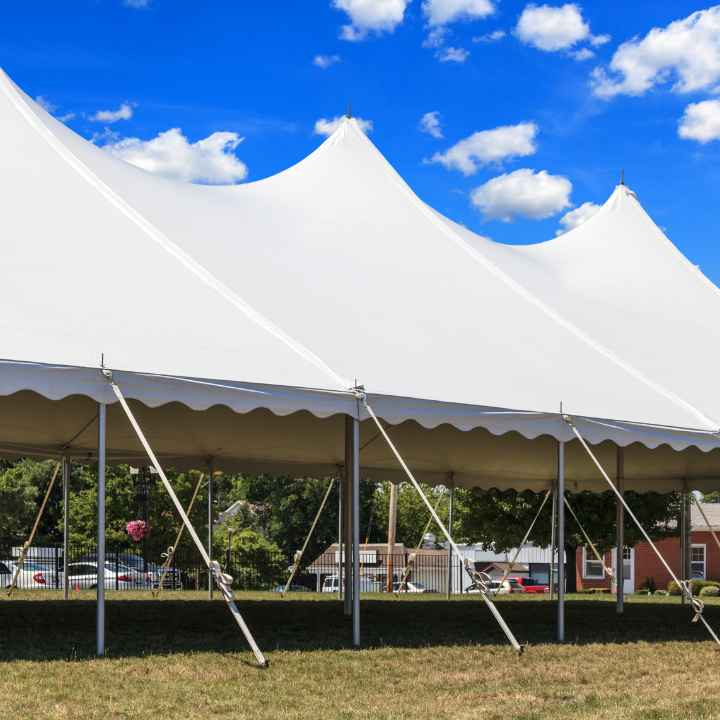
Planning an outdoor wedding, graduation party, or corporate gathering in Hillsborough County, Florida, involves more than selecting the perfect tent. Depending on your event’s location, tent size, and setup, you may need permits or approvals before installation. Overlooking these requirements can create unexpected delays and complicate your celebration.
Florida has building and fire safety regulations that may apply to temporary event tents. Requirements can also differ depending on whether your event takes place in unincorporated Hillsborough County, Tampa, Temple Terrace, or Plant City.
In this guide, we’ll explain when tent rental permits may be necessary, what information event organizers should prepare, and how to avoid common permitting mistakes when planning an outdoor event in Hillsborough County.
Do You Need a Permit for a Party Tent in Hillsborough County, FL?
Whether your outdoor event requires a tent permit depends on several factors, including the tent’s size, intended use, installation duration, and location.
Smaller tents used for private backyard gatherings may qualify for certain exemptions. However, larger tents, commercial events, and installations involving additional equipment may require review by local building or fire safety officials.
Factors that can influence tent permit requirements include:
- Tent dimensions: The total covered area and structural configuration.
- Event location: Whether the property is in unincorporated Hillsborough County or an incorporated municipality.
- Event type: Private celebrations, public gatherings, and commercial events may involve different requirements.
- Installation duration: How long the temporary structure will remain in place.
- Occupancy: The number of guests expected beneath the tent.
- Equipment: Heating, lighting, cooking, and electrical installations.
- Site conditions: Access routes, nearby buildings, and available installation space.
A backyard birthday party may have different requirements than a large outdoor wedding or community festival. However, private property ownership doesn’t automatically eliminate permitting obligations.
Before booking your rental tent, contact the appropriate local building department or fire prevention authority to determine which approvals apply.
What Tent Sizes Require Permits in Hillsborough County?
Tent size is an important consideration when determining whether permits or inspections are necessary.
Florida’s building and fire safety regulations address temporary structures, including certain tents and membrane structures. However, the applicable requirements depend on the installation and the authority responsible for reviewing it.
For example, a small pop-up canopy used for shade may be treated differently from a large frame tent designed to accommodate dining tables, entertainment equipment, and hundreds of guests.
Larger installations may require additional documentation, structural considerations, or fire safety review.
Common tent sizes used for outdoor events include:
- 10-by-20-foot tents: Often used for small gatherings or designated activity areas.
- 20-by-30-foot tents: Suitable for certain backyard celebrations and smaller events.
- 20-by-40-foot tents: Frequently considered for outdoor dining and private parties.
- 30-by-40-foot tents: Provide additional covered space for seating and event activities.
- 40-by-60-foot tents: May accommodate larger receptions and more extensive layouts.
- Larger event structures: Often require additional planning for occupancy, access, and safety.
These examples describe common tent configurations, not automatic permit exemptions or approval thresholds.
A tent’s dimensions alone may not determine whether approval is necessary. Sidewalls, occupancy, structural features, installation duration, and event activities can also influence the requirements.
For Hillsborough County events, verify the current rules with the authority having jurisdiction before finalizing your tent selection.
Who Is Responsible for Obtaining a Tent Rental Permit?
One common event planning mistake is assuming the rental company automatically handles every permit or approval.
Responsibilities can vary based on the rental agreement, event location, and installation type. Establishing these details early helps prevent confusion as your event approaches.
In some situations, the property owner or event organizer may need to obtain approvals. Other arrangements may involve documentation or coordination from the rental provider.
Before finalizing your tent rental, confirm:
- Whether your event requires a permit.
- Which local department handles the application.
- Who is responsible for submitting documentation.
- Whether additional event approvals are necessary.
- Whether an inspection must occur before the event.
- When the tent can legally be installed and occupied.
- What information your rental company can provide.
For events in unincorporated Hillsborough County, county departments may oversee applicable approvals. Events within Tampa, Temple Terrace, or Plant City may fall under the relevant municipal authorities.
Because administrative procedures can differ, confirm the requirements for your specific property address.
Avoid waiting until the week of your event to investigate permits. Reviewing these responsibilities early provides more time to address questions or requested changes.
What Information Might Be Required for a Tent Permit?
When a temporary tent requires approval, local officials may request information about the structure, event layout, and proposed installation.
The exact documentation depends on the tent’s characteristics and applicable regulations. Larger events may require more detailed plans than smaller private gatherings.
Information that may be requested includes:
- Event address: The property where the tent will be installed.
- Tent dimensions: Length, width, and total covered area.
- Installation dates: When the tent will be erected and removed.
- Site plan: A drawing showing the tent’s proposed location.
- Expected occupancy: The anticipated number of guests.
- Interior layout: Seating, tables, aisles, and equipment locations.
- Emergency access: Proposed entrances, exits, and access routes.
- Electrical details: Lighting, generators, and temporary power arrangements.
- Tent documentation: Structural or flame-resistance information when required.
If your event includes multiple tents, catering stations, entertainment equipment, or temporary electrical installations, you may need to provide additional information.
For example, a wedding reception with a large dining tent and separate catering tent may require more extensive planning than a small backyard gathering.
Providing accurate information helps officials evaluate the proposed installation and determine whether additional safety measures are needed.
What Fire Safety Requirements Apply to Event Tents in Florida?
Fire safety is an important part of outdoor event planning, especially when tents accommodate large groups of people.
Florida’s applicable fire prevention requirements address temporary structures and activities that may create fire hazards. Depending on the installation, officials may review tent materials, exits, electrical equipment, and cooking arrangements.
Important tent fire safety considerations include:
- Flame-resistant materials: Tent fabric must satisfy applicable fire safety requirements.
- Emergency exits: Required exits must remain accessible throughout the event.
- Fire extinguishers: Appropriate equipment may be necessary based on the event setup.
- Cooking equipment: Grills, open flames, and food preparation activities may be restricted.
- Electrical safety: Lighting and temporary electrical connections must be installed appropriately.
- Generators: Position equipment to prevent exhaust and carbon monoxide hazards.
- Clear pathways: Tables, decorations, and equipment must not obstruct required exits.
- Heating equipment: Any temporary heating systems must meet applicable safety requirements.
For example, a catering station that uses cooking equipment may require a different arrangement than a tent used exclusively for dining.
Similarly, adding decorative lighting or electrical equipment after the layout has been approved could introduce additional safety considerations.
Florida’s warm climate means outdoor events often rely on fans, portable cooling equipment, and extensive lighting. Include these features in your electrical planning rather than treating them as last-minute additions.
Discuss your proposed setup with the appropriate local authority to determine which fire safety requirements apply.
How Can Tent Placement Affect Your Hillsborough Event?
Selecting the right location for your tent involves more than finding an attractive section of lawn.
The installation area must accommodate the structure, anchoring equipment, guest access, and surrounding property features.
For homeowners throughout Tampa, Brandon, Riverview, and Valrico, landscaping, underground utilities, and drainage conditions can affect where you can safely install a tent.
Important site considerations include:
- Distance from nearby buildings and structures.
- Property boundaries and available installation space.
- Emergency vehicle and pedestrian access.
- Underground gas, water, and electrical utilities.
- Irrigation lines and sprinkler systems.
- Septic tanks and drain fields.
- Overhead electrical wires and tree branches.
- Ground stability and drainage conditions.
- Tent anchoring requirements.
- Guest entrances, exits, and walkways.
Florida’s weather also deserves special consideration.
Heavy rain and thunderstorms can create challenging conditions for outdoor events, particularly when the installation area has poor drainage or saturated ground.
Tent anchoring must be appropriate for the structure and site conditions. Event organizers should also have a weather contingency plan and follow the rental provider’s safety instructions.
If your preferred installation location presents challenges, discuss alternative layouts before finalizing the rental.
What Are the Most Common Tent Permit Mistakes?
Many tent permitting problems can be avoided through early communication and careful preparation.
One of the biggest mistakes is assuming that all outdoor events follow the same rules. Requirements can vary by location, tent type, and event activities.
Common mistakes to avoid include:
- Assuming private events never require permits: Backyard gatherings aren’t automatically exempt from every requirement.
- Waiting until the last minute: Late permit questions can interfere with installation plans.
- Choosing a tent before checking requirements: Certain structures may require additional review.
- Overlooking fire safety: Cooking equipment, generators, and electrical installations may affect compliance.
- Assuming the rental company handles permits: Confirm responsibilities before booking.
- Ignoring underground utilities: Buried infrastructure can affect tent anchoring.
- Changing the layout unexpectedly: Larger tents or additional equipment may require further review.
- Forgetting weather considerations: Florida storms can affect installation conditions and event safety.
- Overlooking local jurisdiction: Tampa and unincorporated Hillsborough County may have different administrative procedures.
Another common mistake is failing to account for the space needed around the tent.
A tent that fits within a backyard may still cause problems if it blocks access routes, conflicts with underground utilities, or cannot be anchored properly.
Reviewing the entire installation area before delivery can help identify potential complications.
How Can You Prepare for a Smooth Tent Installation?
Once you’ve confirmed the applicable permit requirements, preparing the property becomes the next priority.
Start by reviewing the proposed tent dimensions and identifying a suitable installation area. Consider how guests will enter the tent, where vendors will operate, and whether additional equipment requires nearby space.
Coordinate with your rental provider about delivery access, ground conditions, and anchoring requirements. If underground utilities or irrigation systems are present, make sure they are properly identified before installation.
For events involving extensive lighting, generators, or catering equipment, discuss electrical needs early.
Also monitor weather conditions as the event approaches. Florida’s afternoon thunderstorms and seasonal rainfall can affect outdoor event preparations.
Having an appropriate contingency plan helps organizers respond to changing conditions without making unsafe last-minute adjustments.
By addressing permits, site preparation, and equipment coordination ahead of time, homeowners can focus more attention on the celebration itself.
Plan Your Hillsborough Event With Hillsborough Tent & Party Rentals
Understanding tent rental requirements is an important part of planning a successful outdoor event in Hillsborough County. From confirming applicable permits to reviewing fire safety considerations and preparing your property, early planning can help prevent unnecessary complications.
Hillsborough Tent & Party Rentals helps homeowners and event organizers prepare for outdoor celebrations throughout the Hillsborough area. Whether you’re hosting a backyard graduation party, wedding reception, corporate gathering, or family celebration, selecting the appropriate tent and planning the installation are essential steps.
If you’re planning an outdoor event in Tampa, Brandon, Riverview, or a surrounding community, contact Hillsborough Tent & Party Rentals today. Our team can help you explore tent rental options, discuss your event layout, and plan your equipment needs while you confirm applicable permit requirements with local officials.
