
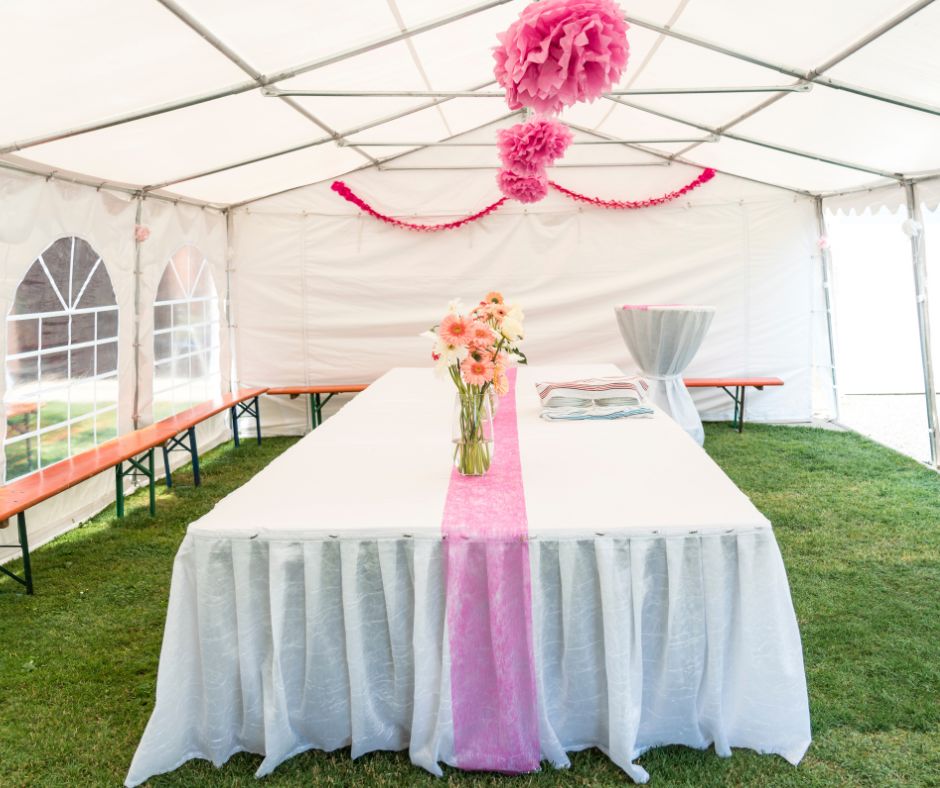
Planning a backyard celebration in Hillsborough County, Florida, can be an exciting way to bring friends and family together. Whether you’re hosting a birthday party, graduation celebration, family reunion, or outdoor wedding, renting a party tent can create a comfortable gathering space while protecting guests from the elements.
However, not every backyard offers a perfectly level surface or an open area suitable for tent installation. Uneven lawns, sandy soil, patios, landscaping, and limited access can make choosing the right tent more complicated than expected.
In this guide, we’ll explain how uneven ground and backyard layouts affect tent rentals, what homeowners should consider before installation, and how to prepare your Hillsborough County property for a successful outdoor event.
Why Does Your Backyard’s Layout Matter for Tent Installation?
When planning a backyard tent rental, consider more than your property’s overall size. Your yard’s shape, ground conditions, and surrounding structures can all affect where you can safely install a tent.
A spacious backyard may appear suitable at first glance, but trees, fences, garden beds, and other obstacles can reduce the available installation area. Even small elevation changes can affect tent placement and anchoring requirements.
Professional tent installation also requires sufficient room for structural components and safe access. Depending on the tent design, you may need additional space beyond the covered area’s dimensions.
For example, a 20-by-30-foot tent may not fit in a space measuring exactly 20 by 30 feet. Anchoring systems, entrances, and installation clearances may require additional room.
Before selecting a tent, homeowners should discuss their property’s layout with the rental provider. Sharing accurate measurements and photographs can help identify potential challenges before installation day.
Can You Install a Party Tent on Uneven or Sloped Ground?
One of the most common questions about backyard tent rentals is whether you can install on uneven ground. Fortunately, you don’t always need a perfectly flat lawn, though the slope and ground conditions matter.
Some tent systems may accommodate minor elevation changes when installed using manufacturer-approved methods. However, significant slopes, unstable surfaces, or uneven support points can create structural and safety concerns.
In Hillsborough County, backyard conditions vary with landscaping, drainage, and property development. Some lawns feature gradual slopes designed to direct rainwater away from homes, while others contain raised garden areas or uneven terrain.
Potential installation challenges include:
- Gradual slopes: Changes in elevation may affect tent support and anchoring.
- Uneven lawns: Depressions, raised areas, and irregular surfaces can complicate placement.
- Soft soil: Unstable ground may affect certain anchoring systems.
- Standing water: Saturated areas may not support installation.
- Retaining walls: Changes in elevation can limit available space and create clearance concerns.
- Landscaping features: Garden beds, trees, and decorative structures may restrict placement.
Homeowners should never attempt to correct uneven ground by placing bricks, blocks, or improvised supports beneath tent legs. Structural adjustments must follow the tent manufacturer’s requirements and an approved installation plan.
A professional evaluation can determine whether your preferred location is suitable or if another part of the property would work better.
What Ground Surfaces Work Best for Backyard Tent Rentals?
The surface beneath your event tent plays an important role in determining how the structure can be installed. Different materials present different anchoring, drainage, and stability considerations.
Grass and Soil
Grass is a common surface for backyard party tents because it often provides open space for installation. However, the underlying soil must support the tent’s required anchoring system.
Florida’s sandy soil conditions can affect how certain anchors perform. Evaluate soil stability, moisture levels, and the specific tent design before installation.
Concrete and Patios
Homeowners sometimes prefer placing tents over patios or paved entertainment areas. These surfaces can provide a firm walking area, but they may prevent conventional ground staking.
Some tent systems can use appropriately designed ballast or other approved anchoring arrangements. However, weighted systems must suit the tent, installation conditions, and applicable safety requirements.
Gravel and Compacted Surfaces
Gravel areas may appear stable but can present challenges depending on the underlying material. Review drainage conditions and anchoring requirements before selecting these locations.
Mixed Backyard Surfaces
Some Hillsborough County properties feature combinations of grass, concrete, pavers, and landscaped areas. These layouts may require careful tent positioning or a different installation configuration.
No matter the surface, never improvise anchoring methods. The rental provider should choose the installation approach that fits the specific tent and property conditions.
How Much Space Do You Need for a Backyard Party Tent?
Determining the right tent size starts with understanding how many guests you expect and how you’ll use the event space. However, the tent’s dimensions are only one part of the planning process.
Tables, chairs, buffet stations, dance floors, and other event features also affect how much covered space you need. A seated dinner may require a different layout than a casual gathering where guests move between indoor and outdoor areas.
Homeowners should also account for the space surrounding the tent. Depending on the structure, anchoring equipment and installation procedures may require additional clearance.
Consider these factors when measuring your backyard:
- Available width and length of the proposed installation area.
- Space required for tent anchors and structural components.
- Clearance from fences, buildings, and landscaping.
- Room for entrances and guest movement.
- Placement of tables, chairs, and event equipment.
- Access routes for delivery and installation crews.
Don’t assume that a tent will fit simply because its listed dimensions match your available lawn space. Confirm the full installation requirements before making rental arrangements.
Accurate measurements can prevent unexpected complications and make it easier to choose the right tent configuration.
How Do Trees, Fences, and Underground Utilities Affect Tent Placement?
Backyard obstacles aren’t always visible from the ground. Trees, overhead wires, irrigation systems, and underground utilities can all affect where you can safely install a tent.
Low-hanging branches may interfere with the tent roof or structural components. Nearby fences, sheds, and exterior walls can also limit clearance for installation.
Underground features require particular attention because many tent installations involve stakes or anchors driven into the ground.
Potential underground hazards include:
- Electrical and gas utility lines.
- Water and sewer connections.
- Irrigation and sprinkler piping.
- Landscape lighting cables.
- Septic tanks and drain fields.
- Privately installed underground utilities.
In Florida, Sunshine 811 provides a notification system for identifying participating underground utility infrastructure before excavation or other qualifying ground disturbance.
However, standard utility marking does not cover every buried feature. Privately owned irrigation systems, landscape lighting, and other private lines may require separate identification.
Homeowners should tell their rental provider about known underground features before installation. Appropriate utility locating and site preparation can help reduce the risk of damaging buried equipment.
How Can You Prepare Your Backyard Before Tent Installation?
Preparing your property before the installation crew arrives can make the setup process more efficient. It also gives you an opportunity to address potential obstacles before they become last-minute problems.
Start by identifying the area where you would like the tent installed. Take measurements and note any slopes, landscaping, or surface changes that could affect placement.
Photographs can be especially helpful when discussing your property with a rental company. Images showing the full yard, access points, and nearby structures can provide useful context.
Before installation day, consider the following steps:
- Clear the area: Remove movable furniture, decorations, toys, and other obstacles.
- Check access routes: Make sure the installation team can reach the proposed location.
- Identify underground features: Share information about sprinkler systems, utilities, and other buried equipment.
- Review drainage: Look for areas that collect water after heavy rainfall.
- Plan for pets: Keep animals away from the installation area.
- Communicate restrictions: Mention gates, narrow walkways, landscaping, or property limitations.
- Monitor weather conditions: Discuss any concerns involving recent rainfall or upcoming storms.
Florida’s frequent heavy rain can leave lawns saturated, even when the weather improves before an event. Soft ground and standing water may affect whether a tent can be installed safely.
Avoid making structural adjustments or installing rental tent components yourself. Professional installation helps ensure the structure is assembled and anchored to meet the appropriate requirements.
What Happens If Your Backyard Isn’t Suitable for a Standard Tent?
Sometimes, a backyard may not accommodate the tent size or configuration originally requested. However, that doesn’t necessarily mean you need to abandon your outdoor event plans.
Depending on the property, selecting a smaller tent may provide enough room for safe installation. Moving the structure to another section of the yard may also help avoid slopes, landscaping, or underground obstacles.
Alternative layouts can sometimes improve how you use available space. Adjusting seating arrangements or relocating certain event features may reduce the amount of covered space required.
Approved flooring systems may also improve guest comfort on certain surfaces, although flooring doesn’t automatically correct unsafe slopes or unstable ground.
For properties with significant limitations, another suitable event location may be the most practical option. A rental professional can help you choose the right arrangements based on the site’s conditions.
Plan Your Backyard Event With Hillsborough Tent & Party Rental
A successful backyard celebration starts with choosing a tent that fits both your event and your property. Uneven lawns, sandy soil, patios, and landscaping don’t always prevent tent installation, but they do make proper planning essential.
At Hillsborough Tent & Party Rental, we understand that every outdoor event space is different. Whether you’re planning a birthday celebration, graduation party, family gathering, or wedding in Hillsborough County, planning early around your property’s layout can simplify the rental process.
From evaluating available space to discussing tent sizes and event arrangements, thoughtful preparation can make a significant difference. Contact Hillsborough Tent & Party Rental today to discuss your backyard event, explore rental options, and start planning a comfortable gathering for your guests.
